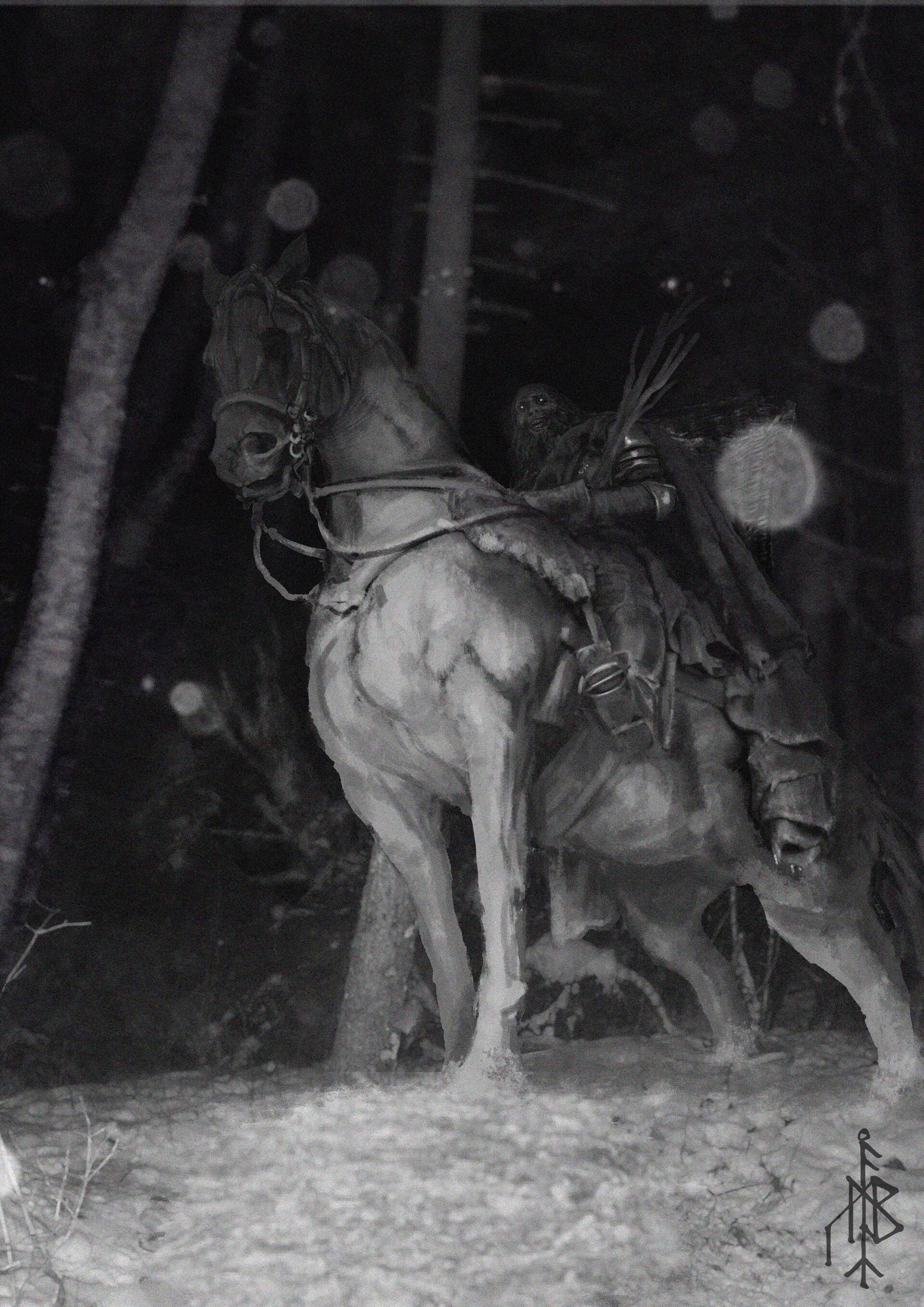
17 Hans Trapp inktober2020
Hans Trapp is a legendary figure from the Alsatian tradition. Accompanying Saint Nicholas during the December holidays, this frightening character would have the reputation of kidnapping or punishing disobedient children by whipping them.
Close to the Lorrain Père Fouettard (« Whip Father »), this two-metre-high bogeyman is described as dark, rough and associable. It is covered with chains, a sack of charcoal on the back, a big black coat and big boots of the same color. Sometimes wearing a pointed hat, he has a long hirsute beard and speaks only in German or with growls of animals. He also likes to ride a horse carrying in his hand a rod or a whip that he likes to slam to scare children.
It is said that his legend was inspired by the knight Hans von Trotha, a nobleman who lived in the fifteenth century in the region of Wissembourg in the extreme north of Alsace. This knight received a castle by the local prince, for his merits. However, this property was disputed with monks who considered themselves the real owners of the place. To avenge himself, Trotha built a dam to deprive Wissembourg of water, while diverting it to flood the lands of their abbey. The helpless monks protested for the return of water to their city. The knight executed himself maliciously and pierced the dam. The waters fell upon the city, causing serious damage to it. However, this catastrophe reached the ear of the Pope who decided to excommunicate Trotha to punish him. The centuries after his death, the local custom attributed to Hans von Trotha all the attributes of a diabolical, bloodthirsty, violent and debauched character. He was accused of terrorizing the population by plundering travelers and peasants, and he was even invented to have made a pact with the devil. His name was distorted into Hans Trapp and he became a local bogeyman known for wandering at night in the forest surrounding his castle in search of human flesh.
(For more information : https://en.wikipedia.org/wiki/Companions_of_Saint_Nicholas http://www.missdirectionentertainment.com/blog-detail/hans-trapp-the-christmas-boogeyman-of-france )
---
Hans Trapp est une figure légendaire issue de la tradition alsacienne. Accompagnant Saint Nicolas durant les fêtes de décembre, ce personnage effrayant aurait pour réputation d’enlever ou de punir les enfants désobéissants en les fouettant.
Proche du Père Fouettard lorrain, ce croquemitaine de deux mètres de haut est décrit comme sombre, rustre et associable. Il est revêtu de chaînes, d’un sac de charbon sur le dos, d’un grand manteau noir et de grosses bottes de la même couleur. Parfois coiffé d’un chapeau pointu, il possède une longue barbe hirsute et ne parle qu’en allemand ou avec des grognements d’animaux. Il aime aussi se déplacer à cheval en portant dans sa main une verge à rameaux ou un fouet qu’il s’amuse à faire claquer pour effrayer les enfants.
Il est dit que sa légende s’inspirerait du chevalier Hans von Trotha, un noble ayant vécu au XVe siècle dans la région de Wissembourg dans l’extrême nord de l’Alsace. Ce chevalier reçut un château par le prince local, pour ses mérites. Cependant, ce bien fut disputé avec des moines qui se considéraient comme les véritables propriétaires des lieux. Pour se venger, Trotha construisit un barrage pour priver Wissembourg d’eau, tout en la déviant pour inonder les terres de leur abbaye. Les moines désemparés, protestèrent pour le retour de l’eau dans leur ville. Le chevalier s’exécuta avec malice et perça le barrage. Les eaux dévalèrent sur la ville, engendrant de graves dommages sur cette dernière. Cependant cette catastrophe arriva jusqu’à l’oreille du Pape qui décida d’excommunier Trotha pour le punir. Les siècles suivant sa mort, la coutume locale attribua à Hans von Trotha tous les attributs d’un personnage diabolique, sanguinaire, violent et débauché. On l’accusa d’avoir terrorisé la population en pillant les voyageur et les paysans, et on inventa même qu’il avait pactisé avec le diable. Son nom fut déformé en Hans Trapp et il devint un croquemitaine local réputé pour errer la nuit dans la forêt entourant son château à la recherche de chair humaine.
(Pour plus d’info : https://fr.wikipedia.org/wiki/Compagnons_de_saint_Nicolas#P%C3%A8re_Fouettard_(Hans_Trapp) https://mon-grand-est.fr/qui-est-hans-trapp/ )